
Human Rights Watch Urges EU to Pressure Saudi Arabia to Halt Executions and Release Detainees
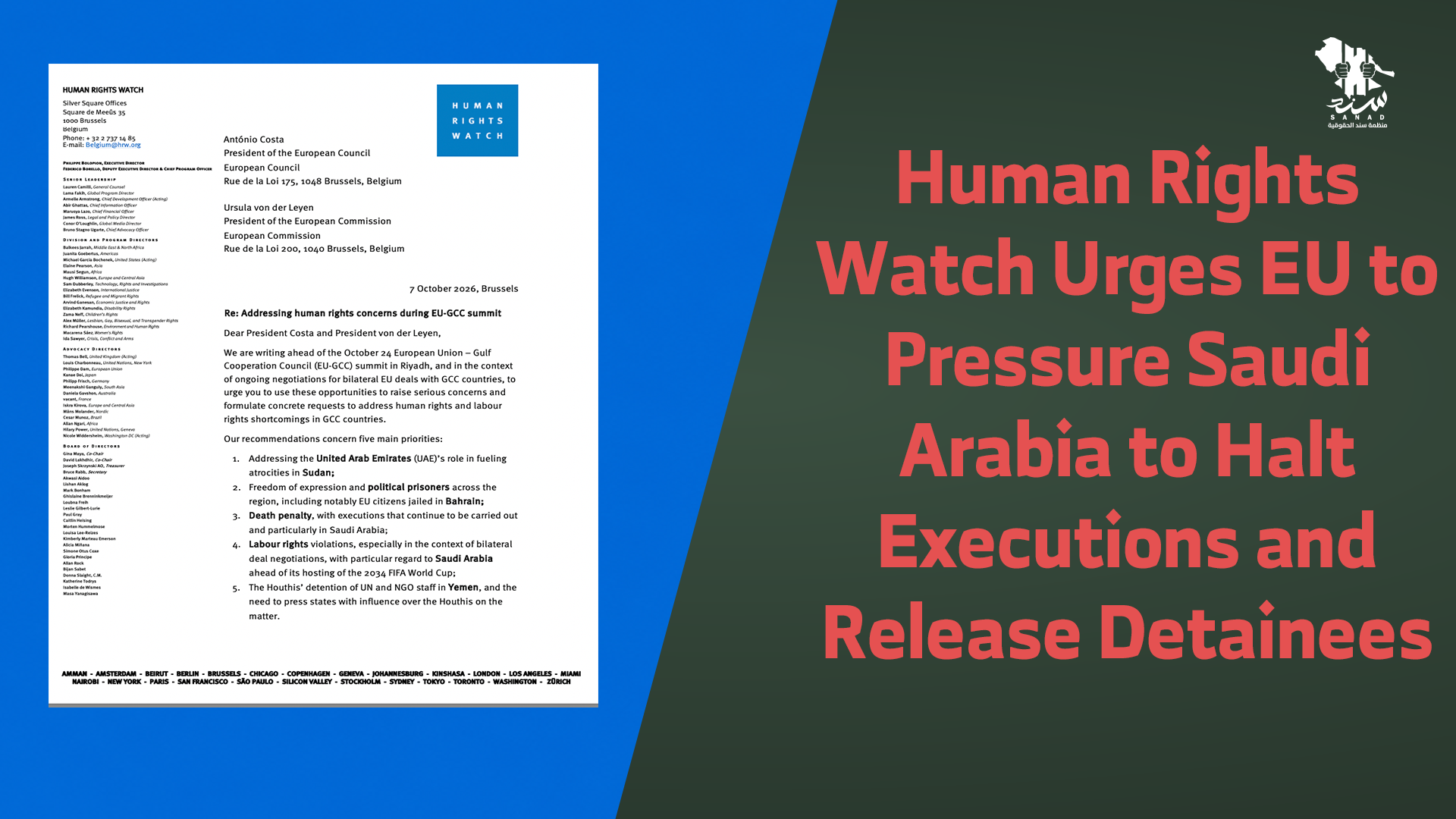
Human Rights Watch (HRW) has called on the European Union to raise human rights concerns in Saudi Arabia, particularly the rising number of executions, the continued detention of activists and human rights defenders, and violations against migrant workers, during the upcoming EU–Gulf Cooperation Council summit scheduled to take place in Riyadh on 24 October 2026.
The call came in a letter sent by the organization on Wednesday, 7 October 2026, to European Council President António Costa and European Commission President Ursula von der Leyen, urging them to use the summit and ongoing negotiations over partnership and trade agreements with Gulf countries to press for meaningful human rights reforms.
Regarding executions, the organization expressed grave concern over the continued rise in executions in Saudi Arabia, noting that authorities executed at least 356 people in 2025, including at least two individuals convicted of crimes committed when they were children.
HRW added that Saudi authorities executed at least 17 Ethiopian nationals in 2026 without respecting fair-trial guarantees, according to the organization, warning that dozens of others face the imminent risk of execution.
The letter also highlighted the execution of Saudi journalist Turki Al-Jasser in June 2025, stating that his case raises concerns about the use of the death penalty to suppress peaceful dissent.
The organization urged European leaders to pressure Saudi Arabia to immediately halt executions as a step toward abolishing the death penalty and to ensure compliance with international standards for fair trials and detention conditions.
Regarding detainees, Human Rights Watch stated that Saudi authorities continue to imprison individuals for exercising their fundamental rights, citing the ongoing detention of Islamic preacher Salman Al-Odah, human rights lawyer Waleed Abu Al-Khair, and activist Manahil Al-Otaibi.
The organization called on European officials to raise these detainees’ cases during discussions with Saudi leaders and publicly demand their immediate release.
On labor rights, HRW warned that migrant workers in Saudi Arabia continue to face widespread abuses across various economic sectors and geographical regions, noting that some practices may amount to forced labor.
The organization stressed that Saudi Arabia’s preparations to host the 2034 FIFA World Cup make addressing these violations even more urgent, accusing the authorities of systematically failing to protect migrant workers and provide them with effective remedies.
HRW also highlighted shortcomings in measures designed to protect workers from the risks of working in extreme heat, alongside restrictions on freedom of expression, association, and peaceful assembly that limit workers’ ability to demand better working conditions.
The organization urged the EU to link negotiations over partnership and trade agreements with Saudi Arabia to clear benchmarks and conditions for improving its human rights and labor rights record. These should include ratifying core international conventions, establishing timelines for reforms, and enabling independent civil society organizations to participate in monitoring the implementation of commitments.
The letter emphasized that discussions at the summit should not be limited to political and economic cooperation but must include specific human rights demands. It also called for European officials responsible for trade negotiations to incorporate these issues into their negotiations with Saudi Arabia.